
Gartner AADI Summit is this Month

November 4, 2011 by Thomas Skybakmoen No Comments

gartneraadi banner Gartner AADI Summit is this Month

We are excited about this year’s Gartner Application Architecture, Development & Integration (AADI) Summit in Las Vegas, November 29-December 2.

Gartner says, “This Summit delivers on today’s key applications issues—from understanding the real business value of cloud computing and learning when, why and how to adopt cloud and agile methods, to making your SOA application development more productive, dynamic and simple.”

We’re looking forward to some of the discussions we’ll have on why organizations are moving many of their business processes to the cloud:  financial statement delivery, electronic software distribution, project management, and patent processing.  We welcome the opportunity to confer on the advantages of a cloud-based managed file transfer solution.  Thru, Inc. will be in booth #NN at the conference, and we hope you stop by and chat if you are attending.

There is a rumor that your first bet at the Caesars blackjack table is on Thru—stop by Thru’s booth to find out the truth.

More Trends in the Managed File Transfer Market

October 19, 2011 by Thomas Skybakmoen 1 Comment

More Trends in the Managed File Transfer Market

In this second video, Lee Harrison and Thomas Skybakmoen, from Thru, Inc., discuss trends in the managed file transfer market, the drivers behind these, and what they see for 2012.

MFT Trends Images part2 scale More Trends in the Managed File Transfer Market

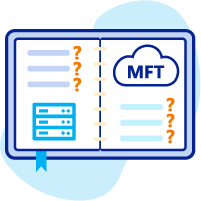
While FTP replacement has been one of the key trends, there are three additional trends that have caught our attention.

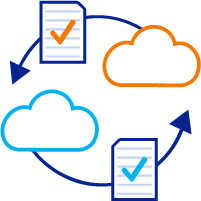
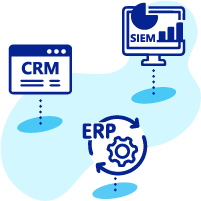
  1. Consolidation
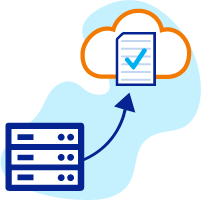
  2. Cloud
  3. Compliance

FTP Migration – A Key Trend in the Managed File Transfer Market Today

October 14, 2011 by Thomas Skybakmoen No Comments

The explosion of files and file-sizes that need to be transferred is ever increasing. This upsurge is forcing organizations to take a step back and evaluate how they are handling today’s digital data.  This is just one of the factors driving a multitude of organizations away from FTP (FTP Migration). Other factors include:  scheduling, security, monitoring for audit-ability, plus scripting and exception handling.

In this first video, of a series that Thru will be presenting over the next six months, Lee Harrison and Thomas Skybakmoen, from Thru, Inc., discuss why FTP Migration to cloud-based managed file transfer solutions is occuring, and what technological advancements have been made in the past months that have lead more companies to the cloud.

MFT Trends Image3 optmised scale FTP Migration – A Key Trend in the Managed File Transfer Market Today

Find out how Thru’s FTP Replacement means no learning curve, no downtime and better compliance.

Managed File Transfer (MFT) vs. File Transfer Protocol (FTP)

September 9, 2011 by Thomas Skybakmoen No Comments

worldwide datatransfer2 blog optimised Managed File Transfer (MFT) vs. File Transfer Protocol (FTP)The term “Managed File Transfer” (MFT) started to emerge in the mid 2000’s as a means to clearly distinguish between the 1980’s “File Transfer Protocol” (FTP) and the fresh approach companies were beginning to use to transfer data.

As defined by Gartner, “Managed file transfer software and services enable users to manage and monitor file transfers within and between organizations.”  In this definition Gartner uses “manage” and “monitor” to highlight and explain the key differences between MFT and FTP.

  • Manage – means to manage all file transfers using one interface (one place) across all business units, operations, systems, applications, partners, etc.
  • Monitor – means to monitor all file transfers in one centralized location which in turn means better governance, compliance and reduced IT costs.

Driven by increasingly stringent privacy regulations and the need to quickly transfer and track files globally, many organizations are in the process of replacing their legacy FTP systems and moving towards MFT solutions.  In fact, cloud-based managed file transfer solutions are gaining the most momentum (more on this subject in future blogs).

PaaS and the Future

August 12, 2011 by Thomas Skybakmoen No Comments

 PaaS and the Future

In an article in Cloud Computing Journal, PaaS is once again highlighted as the future of the enterprise market.

The article Cloud Computing: AppFog Gets $8 Million states that “Industry analysts have told the start-up and its backers that Platform-as-a-Service is beginning to eclipse bare bones Infrastructure-as-Service (IaaS) and should be in for ‘big growth,’ especially in the enterprise market.” Why is this the case?

PaaS can be compared to Lego blocks. As with Lego, PaaS is built using one platform, where only one “product” exists. PaaS may come in different colors, sizes and shapes, but all product enhancements, such as updates, security and new features, is all fed back into one code base, thus everything benefits all customers.

Lego blocks have seen updates over the years, such as better and more durable plastic, more colors as well as the introduction of different sizes and new shapes. The main principle has always remained in focus: Lego did not change the core or the standard of the Lego block, just improved the product and created more solutions to adapt to the changing marketplace. One platform, many opportunities, repeatable success.

A Note on Cloudwashing

August 5, 2011 by Thomas Skybakmoen No Comments

There is a lot of Cloudwashing taking place in the industry today where more established ‘legacy’ vendors are simply rebranding or repackaging existing products and not fulfilling the real potential of Cloud Computing. They often host their products in Cloud environments so they can market their solutions in the “Cloud” category, but at the end of the day it’s still one instance of software and they can’t offer elasticity, horizontal scalability or multitenancy of “true Cloud” based solution.

To understand some of the key differences between the “true Cloud”, and the on-premises software model, companies need to focus on three components: cost, procurement/deployment cycle and expertise:

  1. Cost – A “true Cloud” solution is less expensive in terms of server-to-server comparisons than an on-premises deployment.  An example of this might be when using a cloud service for one project (for a period of time), scaling existing services or simply stopping using it. This elasticity allows you to meet changing capacity demands, deploying and releasing relevant necessary resources on-demand without costly infrastructure changes.
  2. Procurement/Deployment Cycle – With on-premises software solutions, the time it takes to get up and running can be challenging as companies struggle to determine server needs and integration requirements for their environment.  With a “true Cloud” solution, users can conduct business instantaneously, or within 24 hours when customization is preferred.  Horizontal scalability, or adding additional bandwidth, resources or storage to meet business requirements, is seamless and will not interrupt operations.
  3. Expertise – With any on-premises software, companies, or for that matter, vendors need to have the expertise to provision, secure, maintain, update and support the installation. With the “true Cloud” model, the benefit of economy of scale plays a part in support, updates, R&D and services which are all built on the same platform.  Some vendors call this repeatable success, however another term used to describe this would be multitenancy, which is the ability of software to be offered to multiple user entities (tenants) in a way so that each tenant operates as logically isolated while, in fact, using physically shared resources.

 A Note on CloudwashingIn my first blog post for Thru, since leaving Gartner, I wanted to highlight some of the key reasons why Thru is so successful in the market, while, at the same time, opening the floor up for discussion. I am always available via email at thomas.skybakmoen at thruinc.com

In this blog, I will continue to highlight Thru’s current capabilities and how the trends that we see in the market are influencing our product direction.

Integrated Project Delivery Made Easy with Cloud-based MFT

July 13, 2011 by Thomas Skybakmoen No Comments

aec laptop blog 300x199 optimised Integrated Project Delivery Made Easy with Cloud based MFTThe AEC industry is going through phenomenal changes as it positions itself to use electronic technology as a core corporate strategy for tomorrow’s business models. Ready access to information is the key driver pushing the AEC industry into a digital world. Architects have found that the ability to provide timely exchange, and the review and approval of critical project data is a vital component of the project workflow and project success. It is not surprising that many AEC organizations are turning to virtual file systems to ensure their project files are tracked, secured, versioned, updated and synchronized across all members of the project team and the around the world. Before turning to the cloud as a platform to exchange and manage your project information you need to ask yourself some important questions:

  • Is reliable and rapid transfer of large volumes of data such as BIM and CAD files with and between your project team members a constant challenge?
  • Does your project workflow and review/approval process rely on multiple insecure and unmanaged FTP file transfer operations to transfer critical project data?
  • Is control and tracking of project changes and revisions through file downloads and uploads a management nightmare?
  • Do your systems and processes struggle to meet internal and external standards for audit and compliance?
  • Do you need accurate reports on file management overhead to bill back costs to your clients?

Thru’s proven global file collaboration network enables users to securely track and deliver all aspects of project data across the world, be that to China or Dubai. This new network offering from Thru moves project data as close as possible to where it needs be resulting in fast low-latency uploads and downloads and Thru’s patent pending acceleration technology means files are delivered at local wire speeds. For more information, visit our our Web site.

HKS Builds Cowboys Stadium with Thru

July 8, 2011 by Thomas Skybakmoen No Comments

Probably the most prominent sports stadium that has been designed within the last decade, HKS has built the Dallas Cowboys Stadium which really replicates and accentuates the brand of the Dallas Cowboys.

dallas stadium new2 HKS Builds Cowboys Stadium with Thru

HKS Sports and Entertainment Group set-up a system to protect the integrity and the security of all the raw documents that were produced in building the Dallas Cowboys Stadium.  With multiple partners spread out through the world, HKS turned to Thru, Inc. to set up a secure platform that allowed them to share information and documents with all their partners. In this video HKS Architect, Mark Williams, discusses how his team utilized Thru to successfully distribute and receive information with its global partners.

Seeing the Light: Thru’s Exchange Solution

June 29, 2011 by Lee Harrison No Comments

Recently an IT Service Provider, Silverdog Communications, LLC, brought to light yet another interesting reason for adopting Thru, Inc. This provider’s customers include lightbulb 300x204 optimized Seeing the Light: Thru’s Exchange Solutionsmall to mid-sized financial firms that do not have IT resources on staff.  It turns out that the Thru service is a more cost-effective way to enhance Exchange 2003 Mail so that users in small to mid-size operations can work with high-volume and very large files, while keeping under the hard-coded limits of Exchange 2003 Mail databases.  For some customers, adding Thru allows time to plan and implement email server migration.

For standard Exchange 2003, there is a limit of 16GB per database.  Exchange 2003 SP2 allows for database of 75GB, but the default is only 18GB because, according to Microsoft, a change to 75GB database often requires changes to hard drive partitions and/or an upgrade of storage.  Even with the increased size provided by SP2, the database limit can quickly be exceeded when sending numerous and/or large attachments.  The Enterprise version of Exchange 2003 allows for 8000GB database, but the cost of software is significant and would typically require server upgrade.

Customers looking to enhance their Exchange 2003 Mail service, or squeeze that last bit of service out of their Exchange 2003 Mail server before migrating to a newer version, get more bang for the buck by implementing Thru.  Thru has been Exchange-friendly for years, plus the Thru plug-in for Outlook works with Outlook client versions 2003, 2007, and 2010 – even 64-bit Outlook 2010.  Combined with the Thru SharePoint connector and AD integration for Single Sign On capabilities, Thru is the best solution for your Microsoft shop.